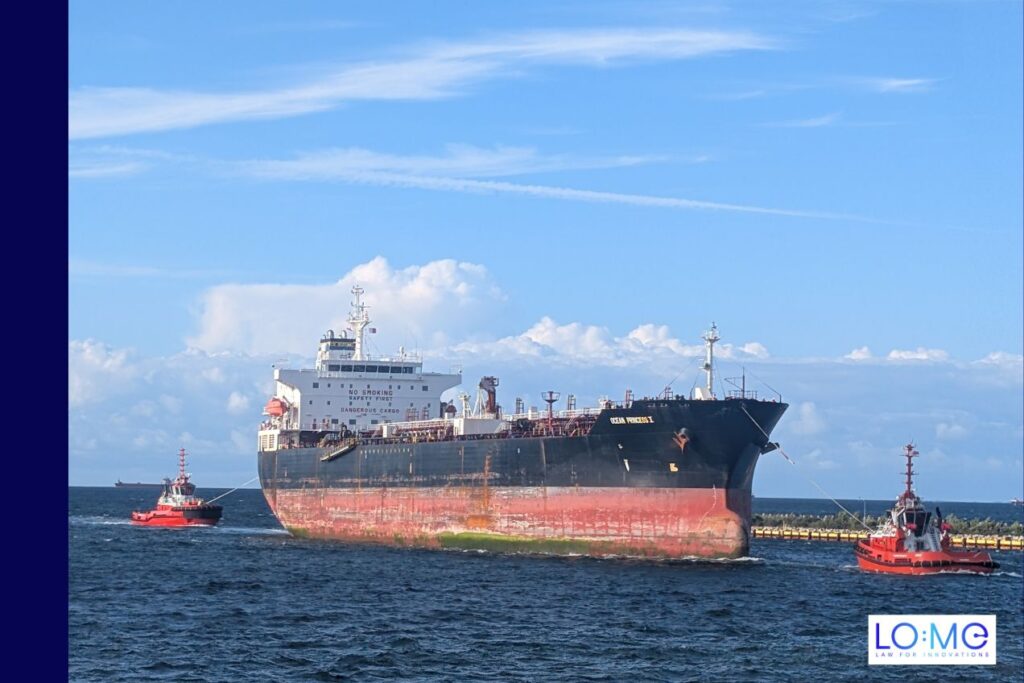
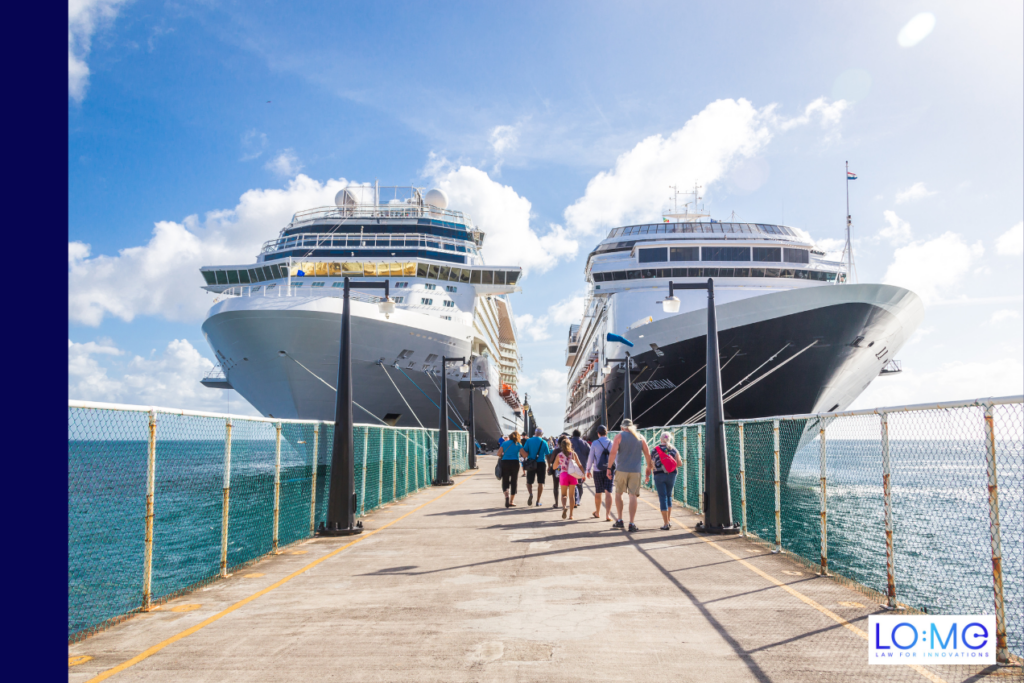
The sea is associated with freedom and unlimited possibilities. But when large commercial vessels, international shipowners, and strategic seaports are involved, there is no room for improvisation. The scale of the issues to be resolved in a liner shipping agreement can be a real headache. In such situations, a good law firm is like a trusted navigator guiding the shipowner through the reefs of maritime laws and regulations. We faced this very challenge at our law firm, LO:ME, when a client came to us. It was a foreign shipowner who wanted to operate a regular liner service between a foreign port and a Polish state-owned port.
To make matters more complex, the port where the service was to be provided was of critical importance to the national economy. Our law firm’s role was to assess all elements of the liner shipping contract. We then drafted a robust agreement to safeguard the interests of our client—a foreign shipowner. We had to analyze the legal risks, evaluate the protective mechanisms, and properly define the rules governing the resolution of disputes. Our assessment was based, among other things, on the Act of December 20, 1996, on Ports and Seaports. Our experience in handling similar contracts for previous clients was also significant. In this case study, we describe the issues we faced while working on a liner shipping contract.
Strict schedules and administrative discipline in shipping
When providing a liner shipping service, every shipowner commits to operating the service without interruption for the entire duration of the Agreement. Otherwise, the shipowner faces financial consequences that call into question the service’s profitability. The shipowner must therefore adhere to a strict schedule of port calls. Such a schedule is drawn up in advance for a specified period. Since, in maritime transport, ports function like a system of interconnected vessels, a delay involving a single ship triggers a domino effect. Therefore, the port call schedule and adherence to it are among the most important elements of a liner shipping agreement.
Any changes to the port call schedule or a change in the vessel operating the route require the prior consent of the Port Authority, expressed in writing under penalty of nullity. An appropriate amendment to the Agreement must also be executed. But what about emergency situations? Although a temporary change to the schedule does not require an amendment, the shipowner must obtain approval from the competent maritime authority. If these conditions are not met, the shipowner will once again face financial consequences: contractual penalties or the full fees applicable to regular shipping services.
In this case, therefore, we had to thoroughly analyze the procedures for applying for administrative permits. Our goal was to draft the contract terms in such a way as to protect the client from an unauthorized change in shipping status to the more expensive irregular shipping service.
- Do you need legal support for your shipping business? Email or call us, and let’s talk.

A Game of Big Money—Port Fees, Adjustment Mechanisms, and Penalties
Legal support for a line contract ensures ongoing protection of the client’s budget. Port fees are calculated in accordance with the currently applicable port tariff set by the Port Authority. The risk lies in the fact that the port has the right to change the tariff or price list at any time, and this does not constitute a modification of the contract.
The Port Authority issues summary billing documents for the ship’s calls, and a verification process takes place. If the system indicates that the vessel failed to make required calls, the Port Authority initiates a correction mechanism. This involves charging the shipowner the difference between the fees paid and the fees applicable to irregular shipping.
Contractual penalties are equally severe. If a shipowner fails to call at the port, the port may impose a contractual penalty equal to the tonnage fee for irregular shipping. Enforcement of such a contractual penalty is almost immediate, as the shipowner must pay it within 7 days of receiving a written demand. The port may also seek damages in excess of this contractual penalty—under general principles.
All of the above elements had to be properly described in the liner shipping contract.
Responsibility for the bathymetric conditions of the body of water
Another aspect analyzed by the law firm is the shipowner’s responsibility for maintaining the proper bathymetric parameters of the water body. If the water becomes shallower or the seabed becomes contaminated, the shipowner is required to remedy the situation immediately at its own expense, in consultation with the Port Authority. The shipowner is also required to provide the results of the relevant measurements free of charge. Failure to comply with this obligation entitles the port to carry out the necessary measures at the shipowner’s expense and risk, without obtaining court approval.
The law firm’s task in this matter was to properly transfer the shipowner’s liability to the entities conducting operational activities at the quay itself. This required drafting separate agreements with subcontractors. In the liner shipping agreement, we also monitored and corrected the accuracy of conducting and archiving bathymetric surveys. The goal was to protect the shipowner from the port carrying out costly remedial work without authorization.
Risk Allocation — When Port Excavators Step In
When providing liner shipping services, a shipowner may encounter certain obstacles and restrictions imposed by the port or maritime authorities. For example, when construction projects are underway at the port. Unfortunately, there is nothing that can be done about this—the shipowner must accept the possibility of such obstacles, even if they threaten the continuity of its service. Furthermore, the Port Authority requires the shipowner to waive any claims against the port for compensation or damages.
However, our law firm’s role is to ensure that such a waiver of claims is not unconditional. The point is that it should be effective only on the condition that the Port Authority has previously informed the shipowner in writing of the nature of the incident, its expected duration, any disruptions, and—if applicable—an alternative berth. In each case, our firm examines whether the information was provided sufficiently in advance to allow the shipowner to take precautionary measures. Demonstrating a failure to provide such information or delays in doing so opens the way to challenging the waiver of claims and seeking compensation from the port.
Difficult Breakups, a Trade Secret, and the GDPR Shield
Liner shipping contracts are typically concluded for a fixed term—a period of several dozen months. The possibility of terminating them with one month’s notice is therefore contingent upon the occurrence of events explicitly listed. These include, among others: a change in the law that is significant from the shipowner’s perspective, or the shipowner’s actual failure to adhere to the schedule. When drafting the contract, we ensure that the Port Authority does not impose an unfair, retroactive adjustment of fees, including interest, on the shipowner.
In the contract, we also protect trade secrets through confidentiality clauses that remain in effect for a specified period following the termination of the Agreement. The provisions of the GDPR are equally important. Given the mutual sharing of a wide range of contact information, we verify compliance with the GDPR, draft disclosure clauses, prepare data processing agreements, and ensure adherence to data retention policies. These are all important areas that must be addressed when drafting a sound liner shipping contract.
Cooperation with VTS Services and Emergency Procedures
A liner shipping agreement requires the parties to comply with the instructions of the VTS responsible for managing vessel traffic.
The VTS (Vessel Traffic Service) is a system/service for managing vessel traffic. It is a maritime administration body responsible for the supervision, coordination, and direct control of vessel traffic in a specific maritime area, including approach channels and within the boundaries of seaports.
As a law firm specializing in maritime law, we had to ensure that the provisions of the contract were properly worded so that they would subsequently be interpreted correctly. The goal was to exempt the shipowner from liability, delays, and financial losses resulting directly from following the instructions of the VTS services.
At the same time, the shipowner is obligated to immediately report any threats to public safety, human life, or the environment. Failure to fulfill this obligation results in full liability for any documented damages incurred by the Port Authority. Our task was to provide legal support for emergency procedures to ensure that the shipowner fulfills its damage reporting obligations in a timely manner and in accordance with the contract.
Summary
The case described here involving a liner shipping contract demonstrates the complexity of the legal issues faced by a law firm serving the maritime sector. The practice of the LO:ME law firm in Gdynia regarding liner shipping contracts is based on continuous risk management at the intersection of complex commercial contracts, administrative law, and maritime law. Through the development of internal procedures, oversight of the port call schedule, management of fee provisions, and a clear delineation of the obligations imposed on the public authority, the legal support for such a contract directly contributes to safeguarding the financial liquidity and international legal security of the shipowner.
Do you need a liner shipping contract? Please contact us.