
In the world of modern construction and the real estate market, the terms BIM (Building Information Modeling) and Digital Twin are often used interchangeably. Many investors, developers, and even engineers believe that possessing an advanced 3D model complete with data equates to having a Digital Twin. This is a conceptual error that entails consequences—not only technological but, above all, legal and contractual. So, what distinguishes a BIM model from a Digital Twin? Discover the differences.
Although a Digital Twin stems from BIM methodology, it represents a completely different type of digital asset. While a BIM Model is essentially a static record of a design or as-built state, a Digital Twin is a living, dynamic system powered by real-time data. This difference necessitates a complete redefinition of the approach to intellectual property rights, cybersecurity, personal data protection, implementation agreements, and liability for defects.
What exactly is the difference between these two concepts, and how can a secure legal framework be established for the transition from BIM to Digital Twin?
BIM model and Digital Twin – from design to dynamic system
To understand the legal differences, we must first precisely demarcate both concepts at the engineering level.
A BIM (Building Information Modeling) model is a digital representation of the physical and functional properties of a building. It is created primarily for the design and construction phases. It provides a structured database of geometry, materials, schedule, costs, and technical specifications. However, even the most advanced as-built model remains, in a sense, a “frozen” snapshot of the building’s state at the time of its commissioning. For example, if a ventilation unit is replaced two years later, the BIM model itself “doesn’t know” this—it requires manual updating.
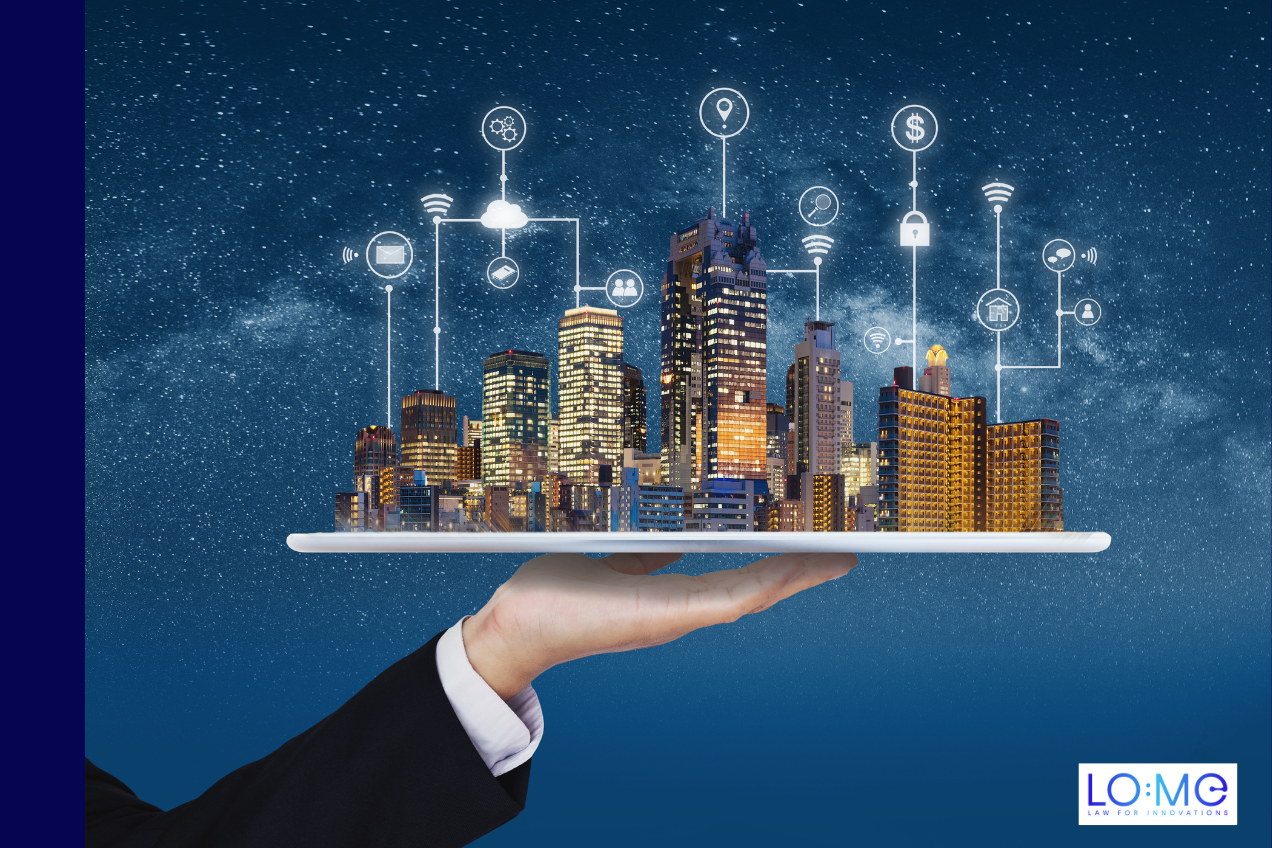
A Digital Twin is a virtual replica of a physical facility, connected to it via real-time, two-way data exchange. It plays a crucial role in the building’s operation and management.
The Digital Twin uses the BIM Model as its geometric base, but integrates it with:
- IoT (Internet of Things) sensor networks,
- Building Management System (BMS) building automation systems,
- Utility meters and environmental parameters,
- Artificial Intelligence and Machine Learning (AI/ML) algorithms.
A Digital Twin reflects not only how a building was designed but, more importantly, how it currently functions. It enables predictive maintenance, energy consumption simulation, operating cost optimization, and automatic response to failures.
Copyright and Data Streams – Who Owns the Building’s “Activity”?
In the case of a traditional BIM model, the primary focus is on copyright in the architectural work and database protection. Transferring copyright or licensing the construction design eliminates the crucial issue of settlement with the architect.
In the case of a Digital Twin, the matter becomes significantly more complex, as this model generates and processes a constant stream of operational data. This raises new questions about the scope of use, financing, and liability.
Telemetry and Sensory Data
This raises the question: who owns the data generated by structural vibration, airflow, or temperature sensors? Raw data is not subject to copyright. However, the method of aggregating, processing, and visualizing it may constitute a trade secret or a protected database.
New EU regulations (EU Data Act)
The Digital Twin falls squarely within the scope of new European regulations regarding interoperability and access to data from connected devices. Contracts must specify who has the right to collect, monetize, and further share data generated by the facility. Will it be the building owner, manager, software provider, or tenant? This is crucial.
Predictive Algorithms
Enhancing a BIM model with AI analytical modules puts the rights to machine learning models at risk. Failure prediction results generated by the system may be subject to disputes over who can use them after the contract with the platform provider is terminated.
Contract Evolution – From Design Agreements to SaaS and SLA Models
The transition from a traditional BIM model to Digital Twin technology requires a fundamental redefinition of contractual relationships. In the case of a standard BIM model, contract execution is most often based on the provisions of a contract for specific work or a design contract. The client receives the static results of the work – finished files (e.g., in IFC or RVT formats) – based on a handover protocol.
The Digital Twin changes this approach. It is no longer a single, delivered file, but a dynamic, continuously operating IT system. This requires the use of multi-level IT implementation agreements and contracts for the provision of continuous services. This requires the regulation of areas previously unrelated to the traditional construction process.
Cloud Environment and Minimizing Vendor Lock-in Risk (SaaS Agreements)
A Digital Twin is most often provided in a cloud-based model as a service (SaaS – Software as a Service). Properly regulating access to the provider’s platform is crucial for the investor. Establishing backup policies and data migration procedures (the so-called exit plan) is equally important. The absence of these provisions creates a high risk of vendor lock-in, i.e., the client’s permanent dependence on a single vendor’s infrastructure and technology.
Ensuring operational continuity (SLA – Service Level Agreement)
When a Digital Twin becomes the primary tool supporting a manager’s decision-making and operational processes (e.g., in energy management or predictive maintenance), its reliability is paramount. It is essential to implement precise SLAs (Service Level Agreements). These must clearly define the required level of system availability (e.g., 99.9% annually), maximum response times to service requests (response time), and target resolution times. They must also ensure the continuity of data transmission from the IoT infrastructure.
Interoperability and API rights
The functionality of a Digital Twin relies on integration with external facility ecosystems, such as building management systems (BMS), enterprise resource planning (ERP), and access control. This integration requires stable communication via application programming interfaces (APIs). Appropriate contractual security of access rights to API documentation and communication protocols is essential. This is to ensure system scalability and avoid technological roadblocks that would prevent future infrastructure development.
Privacy and GDPR in a Smart Building
A static BIM model doesn’t pose significant risks under GDPR. It primarily contains information about walls, pipes, and equipment. A Digital Twin, on the other hand, often becomes a tool for monitoring people in office or retail spaces.
Integrating the model with access control systems, presence sensors at desks (hot-desking), cameras counting traffic or Wi-Fi network logins means that personal data (or data that, using other registers, allows for the identification of individuals) is processed in the Digital Twin.
The facility owner and manager must therefore implement appropriate legal procedures:
- Conduct a Data Protection Impact Assessment (DPIA),
- Regulate the rules for entrusting personal data processing to cloud software providers,
- implement mechanisms for anonymizing and pseudonymizing data of tenants and their employees to avoid accusations of illegal monitoring in the workplace.
Shifting responsibility – who is responsible for the prediction error?
In the BIM model, liability for design errors rests with the contractor, designer, or BIM coordinator. This liability can be claimed under warranty, guarantee, or liability for damages for improper performance of the contract (e.g., a collision between an installation and a structural beam).
In a Digital Twin, the lines of responsibility become blurred. Imagine a situation in which the Digital Twin system, based on an AI algorithm, incorrectly controls the operation of chillers, causing the server room of a key tenant to overheat. Such an error could result in millions of dollars in losses.
Who is responsible?
- The designer who created the original geometry of the BIM model?
- The subcontractor who installed a faulty IoT sensor transmitting false telemetry data?
- The Digital Twin software provider whose algorithm made an incorrect optimization decision?
- The property manager who ignored system warnings?
Without precise contractual provisions regarding the distribution of risks, liability limits and a clear definition of which Digital Twin recommendations are automatic and which require human approval (human-in-the-loop), pursuing claims in court becomes an extremely complicated and expensive process.
Cybersecurity – Digital Twin as the Object of Attack
A Digital Twin connects the world of IT (information technology) with the world of OT (operational technology – the physical control of a building). If a virtual twin can not only read parameters but also actively control devices (e.g., closing valves, changing power parameters, or controlling access), it becomes a direct target for potential cyberattacks.
From a legal perspective, in light of the EU NIS 2 directive and the requirements of commercial property insurers, implementing a Digital Twin requires the investor and property manager to implement rigorous cybersecurity measures. Contracts for the development and maintenance of such a system must impose on suppliers obligations regarding security audits, penetration testing, and immediate incident reporting.
How does the LO:ME law firm support projects at the intersection of BIM and Digital Twin?
Transforming traditional BIM-based construction toward intelligent asset management through the Digital Twin is a process requiring multidisciplinary legal expertise. Our practice combines construction law, intellectual property law, new technology law (IT/SaaS), cybersecurity, and personal data protection.
We help investors, developers, real estate funds, and PropTech providers safely navigate every stage of a facility’s digital transformation.
Our scope of support for construction investments using the BIM Model or Digital Twin includes:
- BIM Model Audit and Rights Settlement. We review existing project agreements to ensure the legality of transforming as-built models into Digital Twin platforms. This includes issues such as derivative rights, decompilation consents, and library licenses.
- Drafting IT and SaaS implementation agreements. We prepare and negotiate comprehensive agreements for the implementation of Digital Twin platforms, including service level agreements (SLAs), API rights, cloud, and project exit regulations.
- Data Rights Management (Data Governance & Data Act). We develop secure models for disposing of telemetry data from IoT sensors and building telemetry, and regulate the rights of AI models trained on facility data.
- Compliance with GDPR and NIS 2. We implement privacy protection documentation for smart buildings (DPIAs, monitoring regulations, and data protection agreements) and audit systems’ compliance with cybersecurity requirements.
- Clear division of responsibilities. We design mechanisms to mitigate the risk of disputes between the owner, building manager, digital platform provider, and technical installation contractors.
Implementing a Digital Twin is a strategic step toward increasing property value and reducing maintenance costs. Are you planning to implement Digital Twin technology in your investment? Or perhaps you are a PropTech provider offering such systems? Contact us – we will help you prepare secure, custom-made legal documentation and smoothly navigate the entire contract negotiation process.