By 2026, it will no longer be just startups or global players that are using robotics and artificial intelligence (AI) in their business operations. More and more European companies are adopting robotics- and AI-based solutions. They are using them in their manufacturing, logistics, and infrastructure. Many of these solutions—especially robotic ones—come from China. How can they be used in compliance with EU law? How can risks be mitigated, these solutions certified, and ensured that they are safe not only for the company but also for the users of its goods and services?
Chinese technologies are very popular in Europe. It’s no wonder. They attract entrepreneurs with their price, scalability, and the fact that they can be quickly implemented within their organizations. At the same time, they continue to raise constant questions about the certification of robotic solutions and their compliance with EU regulations. Most entrepreneurs do not understand the extent of their liability for these solutions. And in our opinion, it is high time to gain this awareness.
The need to write this article arose from our observation that business owners often lack awareness; they—often dazzled by the possibilities of new technologies—forget that this is more than just a technical solution. Read on to find out what companies in Europe (including those in Poland) should consider before implementing robots and AI systems from China. We’ll take a look at the legal landscape, compliance, and regulatory safety.
China is currently the world leader in robotics and AI
It is common knowledge that in recent years, China has become one of the most important—if not the most important—players in the global robotics market. Robots are being deployed on a massive scale in China—across the full range of their capabilities. These include industrial robots, autonomous logistics systems, and Physical AI solutions. Thanks to massive government support for innovative companies, technology in China is not in the testing phase; instead, solutions are being tested in real-world business processes. This is the source of China’s enormous advantage over other countries, which have different models for developing innovation and bringing it to market.
Although not everyone has realized it yet, this approach also has a huge impact on European companies. First and foremost, it gives them access to robotics technology at competitive prices. Because robotic solutions are tested in China under real-world business conditions, the processes based on these technologies can then be automated much more quickly in the companies that purchase them. Finally, Chinese solutions have for years been viewed as an alternative to more expensive—though perhaps even safer—Western solutions.
As a result, the question is being asked more and more loudly: Do robots and AI-based solutions from China meet the certification and regulatory requirements in force in the European Union?
Where in the EU are robots from China most commonly deployed?
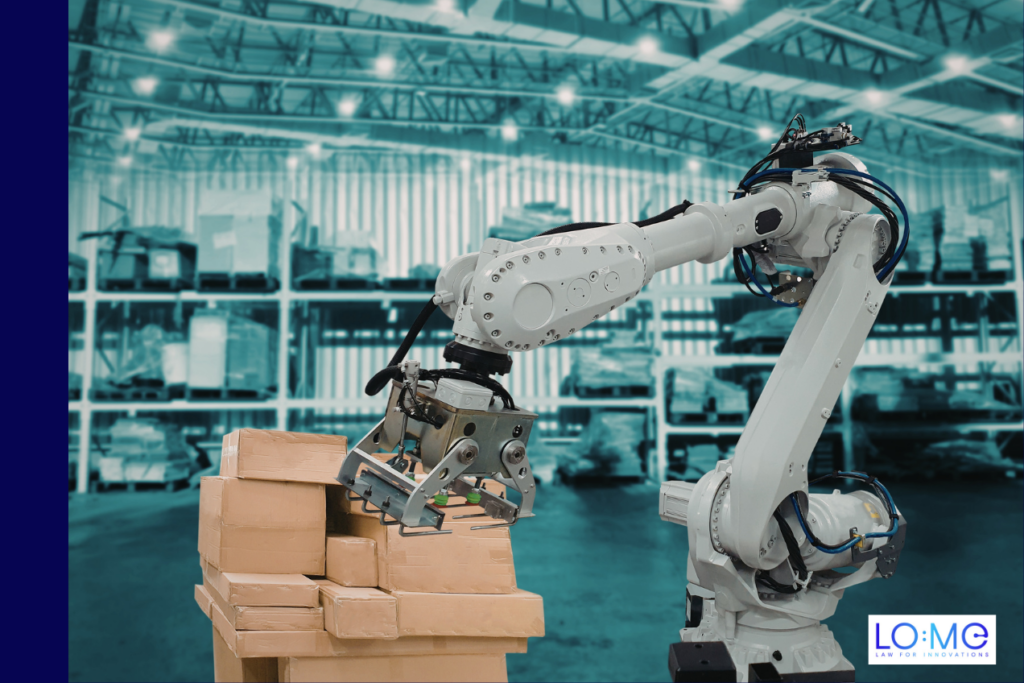
Chinese robots in Europe are already operating across a wide range of industries. They support industrial production—for example, they are used on assembly lines and in quality control processes. In logistics and warehousing, they are used as AMR robots or for automated order fulfillment. They are present in ports and transportation infrastructure. They support the energy sector and help maintain technical infrastructure. They are found in distribution centers and, increasingly, in e-commerce.
Contrary to popular belief, it’s not that automation simply eliminates human labor. It’s about something else. In practice, automation increasingly means reorganizing processes. Not all companies go through this process without suffering losses, but all of them must adapt to new approaches to process management when implementing automation.
Robot Certification in the EU – Basic Principles
One of the common mistakes made by companies using Chinese robots and solutions based on Chinese artificial intelligence is treating them as a technological curiosity or a tool to be implemented. However, we need to pause here. This is because robots and automation systems must undergo certification in the European Union. Experience shows that European companies all too often downplay this issue.
Under EU law, such a robot is considered a machine or an assembly of machines, and if it uses decision-making algorithms, it is also considered an AI-based system. This, in turn, means that before a company can begin using it to provide services within the EU, it must meet certain legal and technical requirements.
- Need help certifying a Chinese robot in the EU? Give us a call: 887 217 166

Does every robot require certification?
Currently, in practice, nearly every robot that a company uses commercially within the European Union is subject to legal obligations. First and foremost, a conformity assessment must be conducted. The company must ensure that the robot bears the CE marking and prepare its technical documentation. Before a company begins using a robot in its day-to-day operations, it must ensure that the robot meets safety requirements.
The CE (Conformité Européenne) marking is a manufacturer’s declaration that the product meets the stringent requirements of EU directives and regulations regarding safety, health, and environmental protection. In the case of robots from China without the CE mark, you cannot legally sell or use the robot in the EU. If you import a robot, you become the “distributor,” and it is your responsibility to ensure that the Chinese supplier has provided the correct documentation.
Failure to fulfill these obligations could prove costly for the company. The relevant authorities may prohibit the use of the robot or impose an administrative sanction, such as a fine. It could be equally costly for the company if the management board is held liable for noncompliance with the regulations.
Certificates from Chinese Manufacturers and Corporate Liability in the EU
Businesses may be lulled into a false sense of security by the fact that the solutions they purchase are, after all, certified. However, these documents—which originate from outside the EU—are usually insufficient. Meanwhile, the group of people responsible for ensuring the compliance of a solution introduced into the EU is quite broad. It includes, among others, importers, system integrators, and even end users, if they modify the robot or its functions.
Furthermore, any change in the robot’s configuration, software, or intended use may require a new conformity assessment and certification of the solution. Many companies are unaware of this as well.
AI-powered robots – additional regulatory obligations
Not every robot uses artificial intelligence. In practice, however, it is sometimes very difficult to recognize and determine which ones are simply technological tools and which ones can actually be classified as using AI. This makes the task even more challenging for European companies. And correctly classifying such a robot can have significant consequences.
This is because if a robot uses artificial intelligence autonomously, it may be subject to additional requirements under the AI Act. In practice, this means additional obligations for businesses. For example, they must ensure human oversight of such systems. In addition, there are additional requirements regarding the documentation of risks, ensuring the transparency of algorithms, and monitoring software updates.
For companies that deploy robots based on or utilizing artificial intelligence, this means they must ensure proper compliance within their organizations—compliance that goes beyond simply holding a CE certificate.
- Would you like us to assess whether your solutions comply with the AI Act? (Compliance) — Call us at 887 217 166 or email us at lome@lome.legal

Cybersecurity and Data in Robotics
Companies operating in industries considered sensitive or regulated must pay particular attention to the provisions of the AI Act. Modern robots are components of cyber-physical systems. This means that they often communicate with the cloud, transmit telemetry data, or are updated remotely. At this point, we would simply like to note that the certification and lawful deployment of such robots are closely linked to cybersecurity, data protection, and compliance with sector-specific regulations, particularly in the healthcare and financial sectors.
Robotization is a strategic and legal decision, not merely a technological implementation
The most common mistake entrepreneurs make is treating robotization solely as a technical project. In reality, it is a strategic decision that affects many areas of a company’s operations, including its business model, legal liability, relationships with regulators, and operational safety. It is becoming increasingly clear that lawyers should also be seated at the table alongside technology managers, programmers, and implementation specialists. Successful implementations of robots and AI require a combination of technological expertise with legal and regulatory analysis as early as the planning stage. Once they are implemented, it may be too late.
Summary – How to Safely Implement Robots and AI from China?
Robotics and AI from China can provide a significant competitive advantage for companies in the EU, provided that their implementation takes certification requirements into account, complies with EU regulations, and protects the business’s legal interests.
In practice, an early regulatory analysis determines whether a robotics project will be a success or result in costly problems. If you’re planning to implement robots, automate processes, or use AI in your company, it’s worth ensuring the project’s legal compliance right from the start.
How can the LO:ME law firm help you comply with the AI Act?
Our law firm assists companies and institutions in implementing EU artificial intelligence regulations. We offer:
- AI Act compliance audits,
- consulting on the classification of AI systems,
- development of technical documentation and procedures,
- training for employees and IT teams,
- ongoing legal support in dealings with regulators.
Contact us if you want to comply with regulations and avoid the risk of financial penalties. We assist both large organizations and smaller companies that use AI in their day-to-day operations.